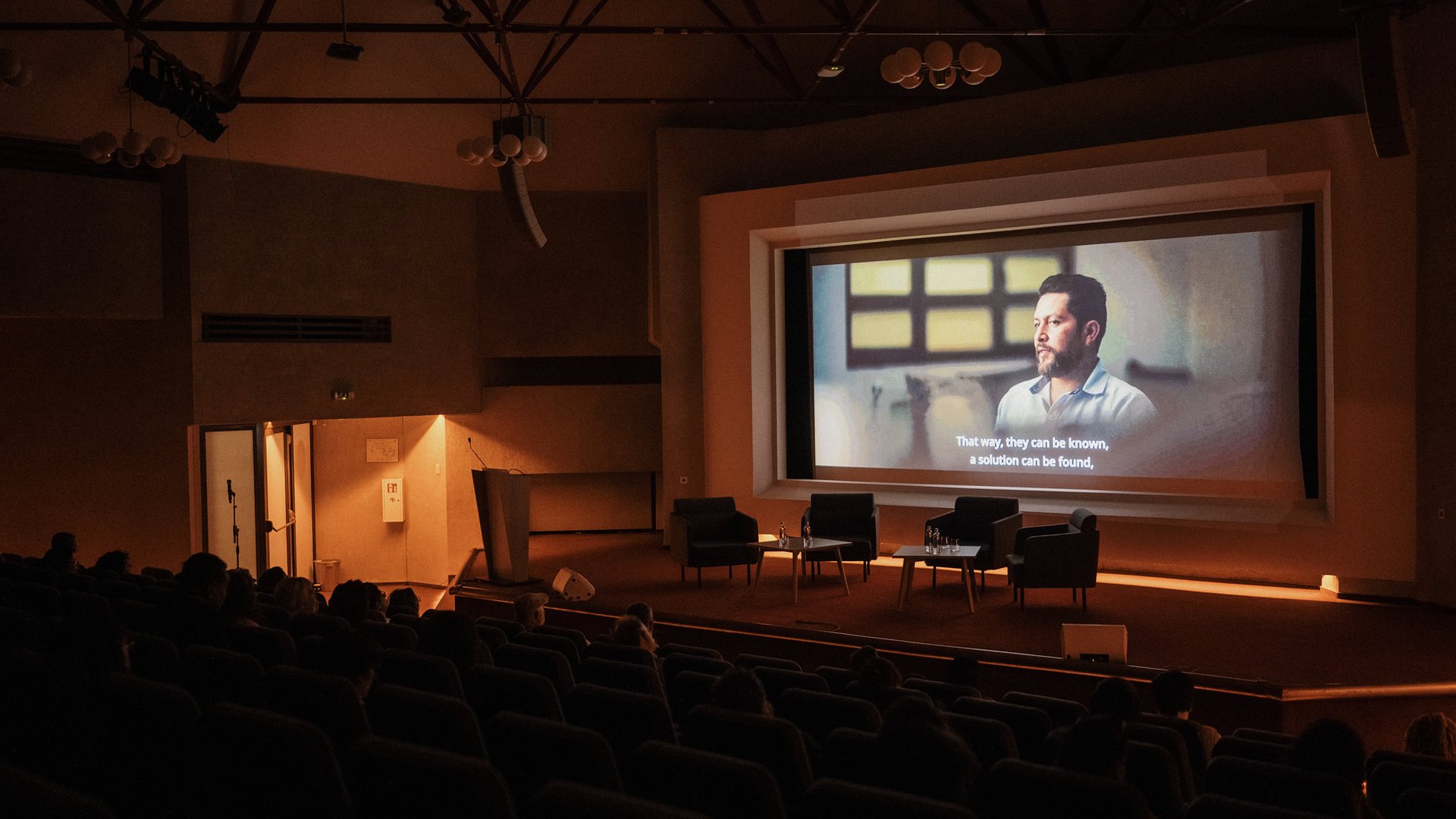
Screenings of Beyond the Lies across Europe shed light on what happens when the Iranian regime cuts off access to the internet. Watch the film, organise a screening — and show your solidarity.
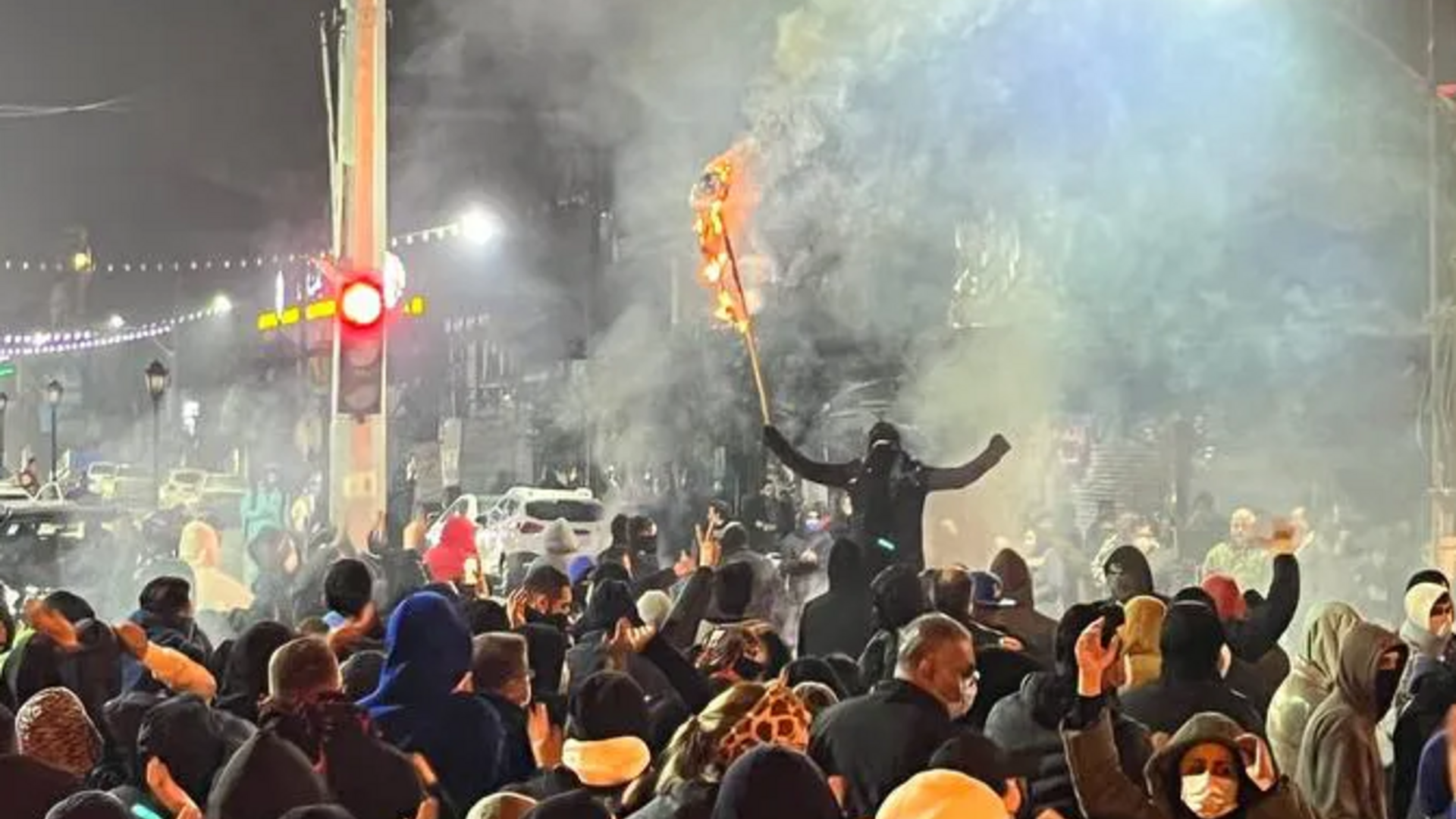
Iran’s internet has been shut down for days, and the little information emerging from the country suggests the situation is grave. By cutting connectivity, Iran’s clerical establishment is trying to silence and crush the protests. Sparked by a deepening economic crisis—and shaped by decades of repression of civil society—the demonstrations have spread nationwide, with increasingly direct challenges to the country’s regime. This situation is reminiscent of reports from 2019, when the internet was previously shut down in Iran before protests demanding human rights, freedom, and democracy were met with gruesome violence.
During the last shutdown, the regime exploited the blackout to suppress information systematically, conceal abuses and intensify its crackdown away from public scrutiny. Over the course of five days, around 1,500 people were killed in silence for demanding basic human rights, freedom and democracy.
With #AllEyesOnIran, we are breaking this deafening silence and showing the reality faced by those who take to the streets. We are screening Beyond the Lies, a newly completed film by director and human rights advocate Mahnaz Mohammadi, across Europe. The film offers a powerful, intimate look at what happens when the internet is cut off — and why public attention can offer some degree of protection. Join us to show your solidarity with the courageous people of Iran, and to demonstrate that the world has not forgotten the struggle of Iranian civil society — one screening at a time.
Watch the film now on Eventive!
Watch our conversation with Mahnaz Mohammadi, Shadi Sadr and Anna Mago now on Youtube!
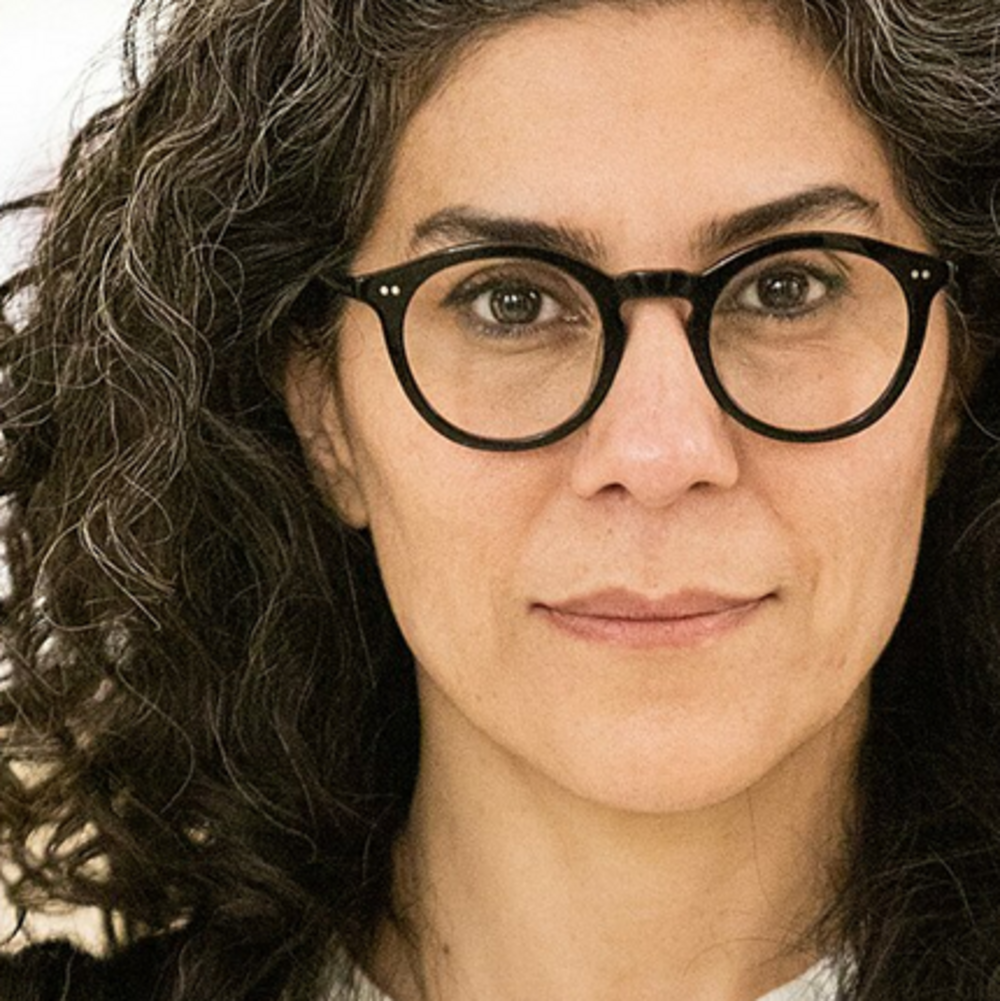
Beyond the Lies is a documentary about the violent suppression of Iran’s November 2019 protests, when a nationwide internet shutdown enabled killings in darkness—and how, in the absence of any court at home, victims and witnesses sought truth and justice through a people’s tribunal beyond Iran’s borders. In November 2019, as Iran’s nationwide internet was abruptly shut down, popular protests were met with extreme violence.
The state narrative labeled protesters as “rioters,” but when the internet was partially restored days later, citizens’ videos revealed another reality: unarmed protesters shot in the streets, mass killings, and systematic human rights violations. Two years later, in 2021, a people’s tribunal was held in London—independent, lacking executive power yet carrying legal and moral weight. In this court, 275 witnesses testified, including survivors, families of the killed, doctors, lawyers, experts, and even members of state forces. No representative of the Islamic Republic appeared before the court.
Structured as a parallel narrative, Beyond the Lies moves between two timelines: 2019, shaped by official state media and denial; and 2021, where testimonies, legal questioning, and evidence reconstruct what was concealed. The film reveals that cutting the internet was not a temporary security measure, but a core instrument of repression—used to erase witnesses, hide violence, and control the narrative.
1) What were the 2019 protests in Iran about?
The immediate trigger of the November 2019 protests was the sudden and dramatic increase in fuel prices. But it very quickly became clear that the protests were not really about petrol. They were led mainly by the working class and economically marginalized communities and reflected years of accumulated anger over poverty, corruption, and the regime’s fundamentally anti-popular policies. Since the violent repression of universities and student movements in the 2000s, almost all protests in Iran have taken on an explicitly political character, because every legal, reformist, and civic channel for change has been systematically closed.
2) What is access to independent media like in Iran?
Internet shutdowns and heavy filtering in Iran are not temporary security measures; they are tools of engineered violence. In November 2019, once the internet was completely cut, repression turned systematic. The mass killings happened precisely after people were disconnected from the outside world. Without internet access, there was no way to document events or alert the international community. This blackout was deliberate, and it enabled the massacre.
3) How did the tribunal come about, and what did it mean?
The tribunal was initiated by three human rights groups, largely led by Iranian women activists. Many of them were forced into exile after the Green Movement but continued their work to raise international awareness and to create legal and international pathways for justice. Despite severe risks, witnesses from inside Iran participated online and gave testimony with extraordinary courage. The tribunal was not a substitute for formal justice, but an act of truth-telling: a way to document crimes, break enforced silence, and insist that the world confront what happened in Iran.