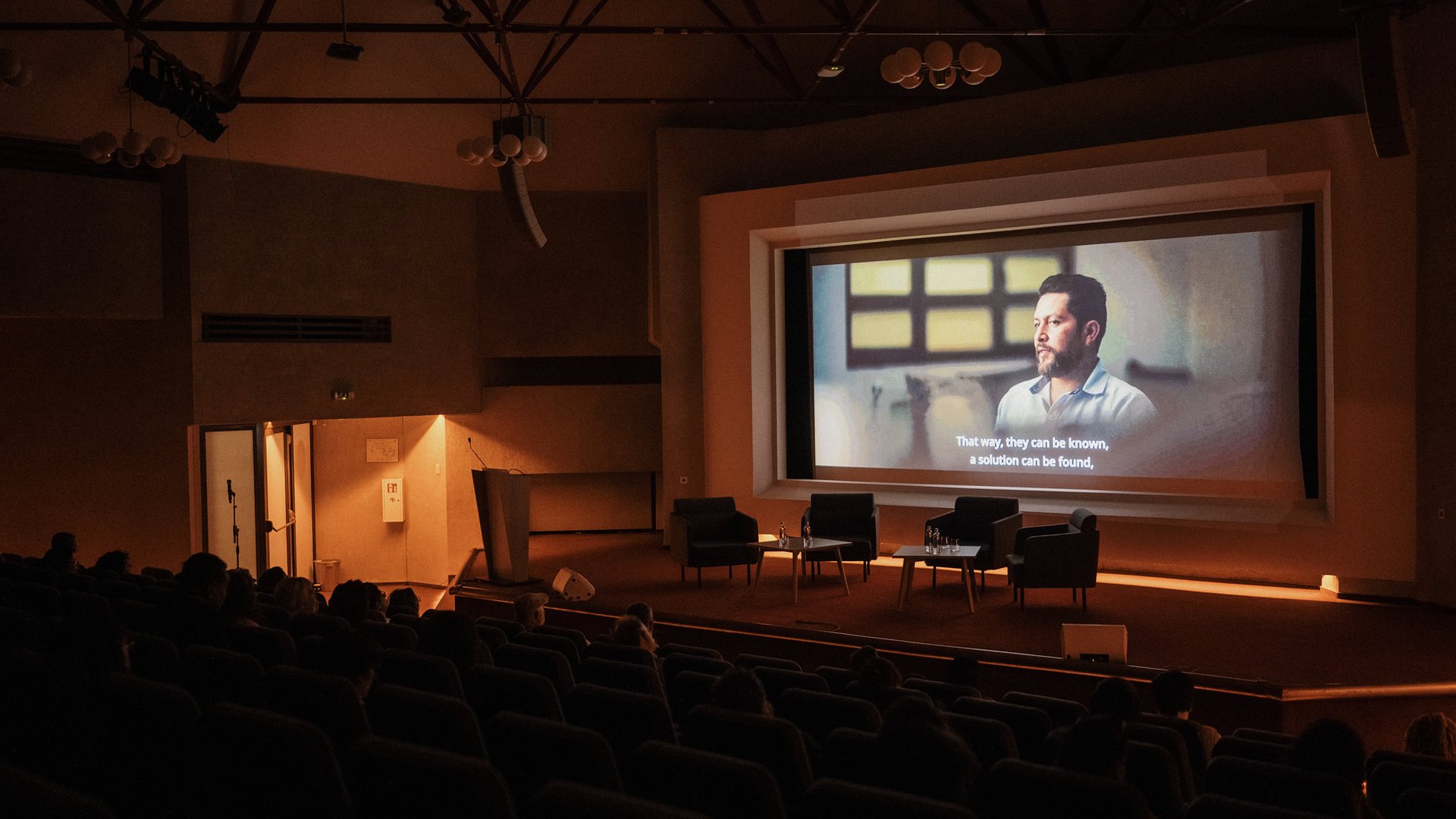
© Filmstill Girl Climber
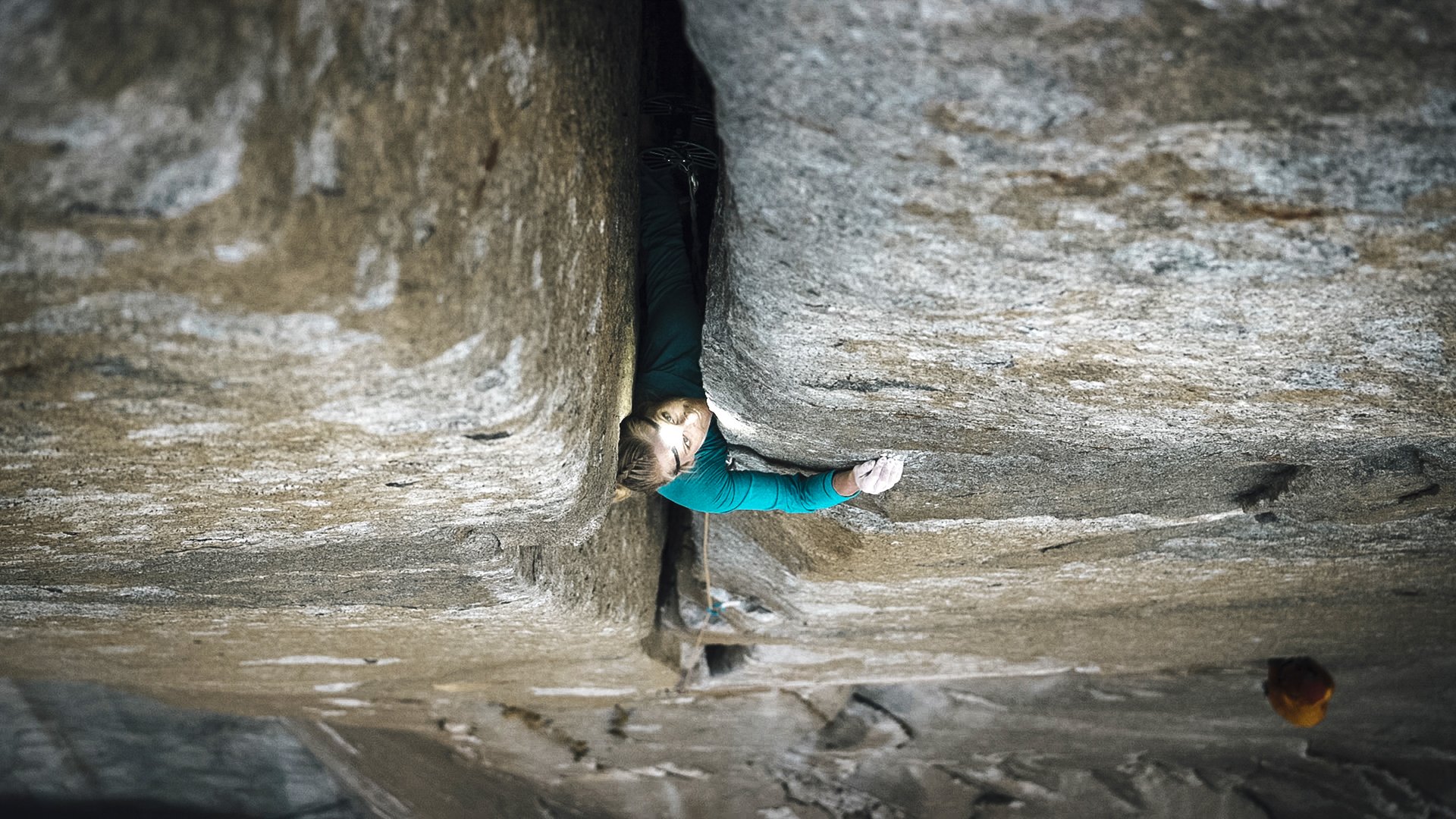
© Filmstill Girl Climber
What drives people to go where fear is inevitable? "Girl Climber" follows Emily Harrington to the limits of what’s possible—and reveals why risk itself can hold a moment of radical aliveness.
Fingers search for a hold. Legs begin to shake. Is the foot placed correctly? You look down – but that’s not a good idea. The dizziness sets in.
Anyone who is afraid of heights and has ever hung on a climbing wall knows this feeling. You are secured. You are not in mortal danger. And yet there it is – that pull in your stomach, that whisper: you could fall at any moment.
Fear of heights is not logical. It doesn’t ask for facts – not for centimeters, not for safety systems. It is a physical state. Your hands grow damp, your muscles tense, as if bracing against something invisible.
In this state, you’re not only hanging on a climbing wall, but also for 83 minutes in your cinema seat, staring at the screen where professional climber Emily Harrington pushes beyond limits.
Emily Harrington is a five-time U.S. national champion in lead climbing. She was the first woman to free-climb the Golden Gate Route on El Capitan in Yosemite in a single day, and only the fourth woman ever to complete any El Capitan route in a day. In Girl Climber, we follow her journey.
The film doesn’t simply show climbing. It shows the ascent into the unknown, the conscious crossing of a boundary that very few dare to step beyond – but which, for people like Emily Harrington, means everything. We see a young woman moving across rock faces that allow no mistakes: height, emptiness, and the decision to keep going.
Why do people like Emily Harrington seek out situations in which the body goes into alarm mode? Why go to places where fear is not just possible, but inevitable?
Perhaps the answer lies precisely in that feeling.
Because the fear of height, the adrenaline you feel during your first climbing attempts, is a raw, unfiltered reaction. It confronts you with your own vulnerability. It makes you feel alive. Suddenly, you are all body, all present, fully awake. Every hold matters. Every step is a decision.
Girl Climber radicalizes this feeling. What is tamed and controlled in the climbing gym becomes an existential reality outdoors.


Harrington surrenders to the risk – not out of recklessness, but out of a form of devotion. She does not just accept fear; she challenges it. Not as an obstacle, but as a companion.
And this is where incomprehension begins – or perhaps awe. Because while you sit in your cinema seat, tense yet safe, something transfers. An echo of that intensity.
Perhaps that is exactly what draws people to climbing: the compression of life into a single moment. No background noise, no distractions. Just you, the wall, and the question of whether you can find a hold. Whether you can go further than last time. Whether you will reach the top.
The risk is not an end in itself. It is the condition that makes this moment possible in the first place. Without the possibility of failure, there would be no need for courage. And yet, the ambivalence remains.
You find yourself wondering: is this freedom – or self-endangerment? Is it admirable to venture this far out, or simply incomprehensible? Is it impressive to have the sheer will, courage, and passion that allow Emily Harrington to achieve the extraordinary? The answer is different for everyone. But the film is, without question, worth seeing.
The film Girl Climber is part of a diverse selection of works featured under the Female Lens category. At its core is a feminist perspective that offers fresh viewpoints and invites reflection. Learn more about this film here, and explore our program under the Female Lens theme to discover more compelling films from a feminist perspective.