Toby Perl Freilich’s documentary Maintenance Artist is about Mierle Laderman Ukeles, a pioneer of performance art who wrote the Manifesto for Maintenance Art in 1969. In this interview, the director talks about an extraordinary artist.
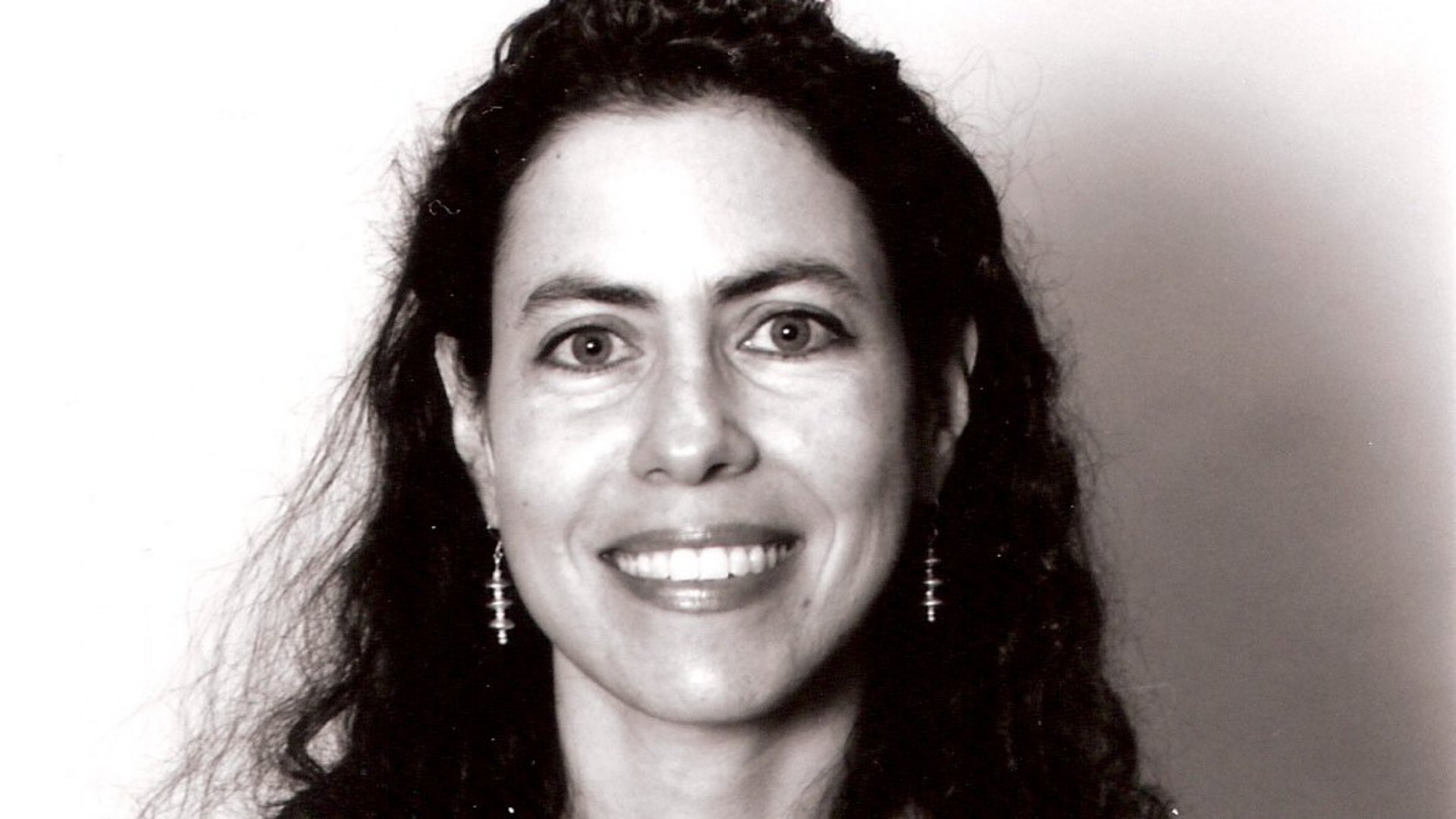
It was the Queens Museum exhibit in 2017. I hadn't heard of Ukeles before, but a lot of my friends had seen the show and they said, You've got to see this exhibit! I went on the very last day with a friend. After an hour and a half, she wanted to leave but I couldn't. I was just so stunned and taken by Ukeles’ work. I thought it had incredible conceptual depth, enormous creative breadth.
She was such a charismatic person, she is still alive and i could interview her. There was obviously a lot of archival material. Plus, Ukeles’ story unfolded during a time of great cultural, social and political upheaval, in the 60s, 70s and 80s. So, it had all the elements of being a great film and I thought, bingo, this is the next project. It took me eight years to make the film.
Well, you kind of feel your way in the beginning. I always thought it was ironic that here was a generation of artists who were engaging in performance work in an attempt to dematerialize art, but at the same time they had an instinct to record what they were doing. And so, these ephemeral artworks became rematerialized. I was fortunate that she had a well-catalogued archive of all these videos and stills of her performance work. At the time, she worked with whatever was cheap and available, including Portapak, one of the earliest forms of portable video, for example. If she got any kind of grant money, she often used it to hire photographers or videographers.
As you can see in the film, Mierle was very much influenced by Duchamp (French-american artist 1887-1968, pioneer of concept art, ed. note). At some point she realized that she didn’t need to be divided into two people, a mother and an artist, that she could in fact take what she was doing as a mother and as a housewife and turn it into art in the same spirit that Marcel Duchamp had with his readymades.
In terms of working with Mierle to make this film, it’s true that for many of the eight years that it took to make the film, she was more interested in continuing with her work than in engaging with the film process. But during the two or three years of COVID, everything slowed down and she and I would meet – with masks – to review her work and talk about it. Eventually, I raised enough money to have some early scenes cut together and then I think she began to appreciate that the film would be an important adjunct to her oeuvre, that it would bring her work to the public in a unique way.
In accepting a residency with the Department of Sanitation Mierle said that she wanted to “inject art directly into the city's bloodstream.” She said that one can make art even in this unlikely location – the last place anyone would associate with culture. Here we are in New York, she was saying, surrounded by municipal workers whose work we utterly depend on but mostly ignore and certainly don't appreciate. Mierle wanted to change that, to make this invisible maintenance work visible and to give it value.
With “Touch Sanitation,” her first work as artist in residence, she went and shook hands with and thanked 8,500 sanitation workers individually. It took her 11 months to do that following a year and a half of research. She said to herself: I have no money and no salary and it doesn’t cost anything to do that. So, being underbudgeted also forces you to be creative. That doesn’t mean she didn’t have ideas on a very grand scale even back then, and it’s a great frustration for her that she can’t create on that scale because of budgetary constraints. But Mierle has been a dedicated public artist for almost her entire career. She wanted to bring people into public spaces to experience art, and to spread art into the public arena.
Since Mierle's work is all about transparency and collaboration, I co-opted those tools and brought her into the filmmaking process.
I think she was careful, and in a smart way, of being both. She is very, very protective of the fact that she’s an artist. In the film she says that she is not a social worker. Or a sanitation worker or a union organizer, for that matter.
And the reason for that is she believes in revolution. Mierle wanted to create a revolution, but she said she wanted it to happen within the cultural realm. She doesn’t think of herself as a political agitator per se.She says culture is where change happens.
Yes, but she also wore pink! There used to be a store in New York, in Soho, called Canal Jeans. I remember it, too. They had these very inexpensive jeans, jump suits and other cheap, simple clothes. That's where she would go to pick these outfits.


Marcia Bricker, Filmstill Maintenance Artist
It's usually the woman in a relationship or in a household who is aware of the maintenance work that they do. So, I've long been aware of there being a notion of maintenance as just something that happens automatically by an unseen hand.
I don't think of my own daily routines as a kind of art, but I definitely think of it as a category of work. And that's how it started for Mierle. It was when she understood her role as child-carer and housewife as unsalaried maintenance work that she became attuned to the entire world of maintenance workers and their value to society. Their work allows culture to flourish. She is saying that without sanitation workers, there can be no art.
The world of trash for example is purely object based. It’s all this crap that we throw away. But Mierle says: There’s a larger thing going on there that’s not about the object. It’s about the invisible work that takes care. It’s a value not a thing.
I grew up in a religious home. Mierle grew up in a religious home and is still 100 percent observant. And she and I, even though we're a generation apart, grew up in homes where there was no kind of conflict between being religious and caring and understanding that that every person has dignity and every person needs to be treated with dignity. Those are just values that we were raised with.
When I became interested in Mierle as a subject, it was also during the very first Trump administration, right after he had taken office.And I was shocked at how this whole value system of respect was now being denigrated and something else, being a bully, was being raised up.
My parents were both survivors of Nazi concentration camps. And I felt like I grew up in a world where fascism and authoritarianism had been thoroughly discredited. But now, I’m afraid, the world is sort of drifting back toward authoritarianism. And I know that is very shocking to Mierle as well. During filming I became more and more aware of the urgency of making a film that celebrated caring about others.
Making a film is a bit like baking a cake or cooking a meal with a chef who has a skilled team, right? It’s a communal effort, just like the collaborative element of Mierle’s maintenance art. I was fortunate to work with very talented craftspeople and artists, whether they are directors of photography or editors, composers or sound people. I really appreciate what they individually brought to this. It was this team of people who helped to bring this film to life.
Yes, so I was running out of money and I was up against a deadline. I think I would have liked to interview some younger artists who were influenced by her. Then the other thing I wanted to include is a sanitation worker who is still around in New York, who appears in archival footage in the final film. But just when I wanted to interview him, which was when I was going up against that deadline, he became ill and couldn't participate.
But overall, I think, there is a good balance of material in the film. And that balancing is something that Mierle was part of as we considered most of the work in her oeuvre. I think Mierle would have liked to have more of her work in the film, but as a filmmaker, I wanted the most compelling dramatic film that we could produce, and sadly, that meant that we had to leave a lot out. It was important that we included her work ballets with trucks and barges as well as her work during the pandemic and much more.
She is part of a cohort of female artists in the 60s and 70s, who were drawing attention to the female cause. But most of her cohort was drawing attention to the ways women and women's bodies were being objectified, sexualized, or becoming subjects for violence. Legitimately, that was an important area to tackle.
But Mierle’s focus was on the work that women were doing at home. There were other women artists who engaged with that, but she was the first – and maybe the only – to bridge the gender divide and say, we need to respect the work itself, no matter who is doing it, man or woman. In that sense, she really was a pioneer.